

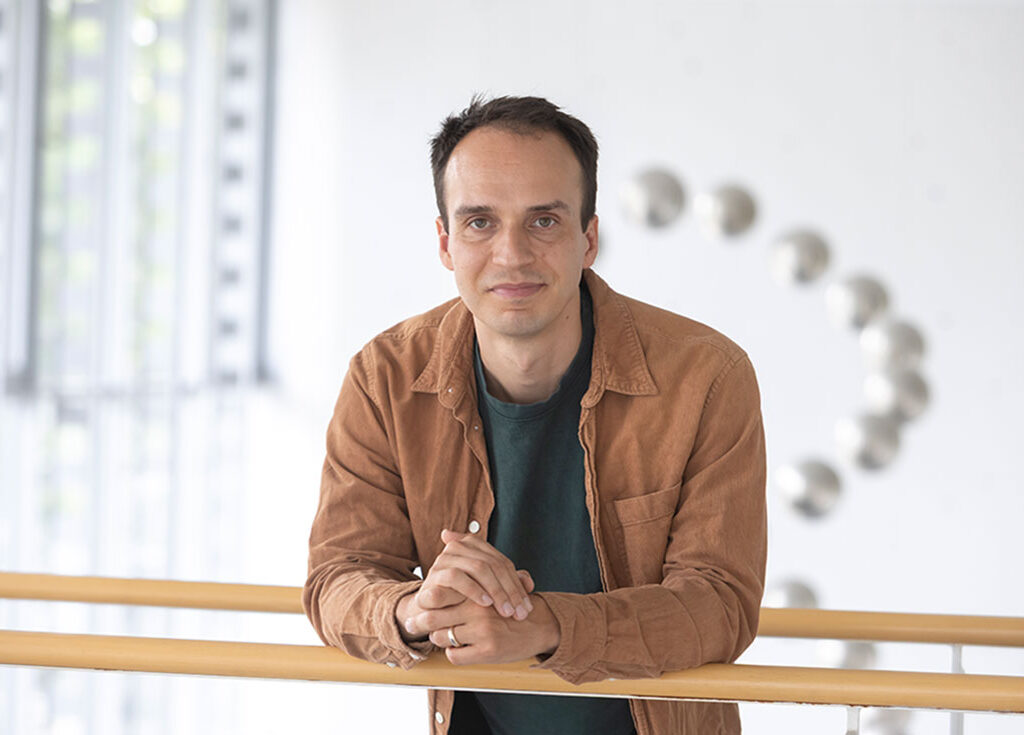
)
That was the epiphany — I thought this molecular research was terrific.German version/Deutsche Version
An Epiphany in Heidelberg
Bohlen owes his success as a border crosser between translational biology, human genetics, and immunology to the German Cancer Research Center (DKFZ) in Heidelberg. It was there that he was helped to switch tracks — because until then he had bet on the wrong horse. Raised in southern Palatinate, he had enrolled after high school in the bachelor’s program in biotechnology at Mannheim University of Applied Sciences. At first, he was highly motivated by the prospect of learning how to turn biological insight into technical innovation, but he grew increasingly disillusioned with a curriculum that revolved above all around the industrial production of microorganisms. “In the third and fourth semesters we spent weeks on impeller design and mass transfer,” he recalls. “I found that extremely boring.” Luckily for him, the program required a semester of practical training. While most of his fellow students went into industry, he found a position at the DKFZ in Peter Lichter’s group. There he was brought into a project on signal transduction in the spread of certain tumors. “That was the epiphany — I thought this molecular research was terrific. It was clear to me then that I wanted to go deeper into it.” After finishing his Mannheim bachelor’s degree with top marks, the move to Heidelberg University was not entirely straightforward, he says, but in the fall of 2015 he was able to begin the master’s program in Molecular Biosciences there. The decisive influence on him became his mentor and doctoral adviser Aurelio Teleman, head of the DKFZ division “Signal Transduction in Cancer and Metabolism.”
Two Foundational Papers
Among Teleman’s interests at the time were two molecules with the unwieldy abbreviations MCTS1 and DENR. Originally studied mainly in connection with tumorigenesis and cell proliferation, they had, from around 2010 on, attracted growing attention for what they do at the ribosome. Without belonging to its permanent staff, these translation factors were evidently indispensable temp workers on the assembly lines of protein production — particularly when a cell came under stress and had to manufacture only urgently needed proteins, quickly and selectively. The one problem was that no one had ever watched these factors at work in human cells. Teleman therefore suggested that Bohlen develop a suitable method for observing them. “For almost two years I practically broke my teeth on that task, and it simply would not work,” Bohlen says. At one point he thought he was within reach of the goal, only to realize that his result was a nonspecific signal. “That was the low point; I could already see my doctorate on the verge of failing.” But Teleman kept encouraging his doctoral student, and eventually, with the help of a chemical trick, Bohlen fought his way through and the logjam broke. The result was two foundational papers that in 2020 set the course for Jonathan Bohlen’s career. From complementary perspectives, they shed new light on the process of re-initiation at the ribosome.¹ ²
The Throttle Valves on the Ribosome
A ribosome — every human cell contains millions of them — resembles a mobile pop-up factory made of two parts that form a single unit only during production. Only once its small subunit has bound to a messenger RNA and recognized the start codon on it (usually AUG) does the large subunit join it. Besides a series of translation factors, this initiation step also requires a transfer RNA carrying a starter amino acid. The messenger RNA is then drawn between the two parts of the ribosome in steps of three nucleotides at a time. Each nucleotide triplet designates a particular amino acid. In the small subunit this genetic code is scanned. Triplet by triplet, the complementarily encoded transfer RNAs dock on like adapters. In the large subunit, the amino acids they deliver are linked into a growing peptide chain at a rate of roughly four amino acids per second. The process ends as soon as a stop codon appears on the messenger RNA. The newly synthesized protein detaches from the ribosome, which thereupon splits back into its two subunits. After this recycling step, both can reassemble on the same or a different messenger RNA to produce the next protein. That is re-initiation. Often it even happens twice during the synthesis of a single protein. For in nearly half of all human messenger RNAs, the open reading frame (ORF) whose nucleotides encode a protein is preceded by at least one short reading frame, an upstream ORF (uORF). It acts like a throttle valve meant to prevent translation from proceeding too hastily. Once ribosomes have read this uORF, they have to be re-initiated before they can begin translating the actual protein.
Ramping Up Protein Production
Bohlen made this “tricky situation” intelligible by observing, for the first time, the small subunit of the human ribosome in the act of scanning. In doing so he discovered that the translation factors that help accomplish initiation remain bound at the leading edge of the emerging peptide chain until it is about twelve amino acids long. That means: when short uORFs are being read, these factors stay in place long enough to initiate the next round of translation right away. They are immediately available for their next deployment. “The same protein is produced again and again, because many ribosomes can read the same main reading frame one after another,” Bohlen explains. This accounts for how a cell manages to ramp up production of particular proteins quickly when the need arises. Using the well-known stress factor ATF4 as an example, Bohlen showed that this requires the presence of the translation factors MCTS1 and DENR. Otherwise, a traffic jam builds up in front of the main reading frame, throttling production instead of increasing it.
Building a Bridge to Genetics
In the years that followed, Jonathan Bohlen was able to put this insight to unexpected use. “My doctoral adviser gave me the shrewd advice to open myself up to a new topic as a postdoc.” And as chance would have it, MCTS1 proved to be the springboard into just such a topic. Jean-Laurent Casanova, a pioneer of the human genetics of infectious diseases at the Imagine Institute in Paris, had become aware of Bohlen’s work on this translation factor — because he was wondering whether it might also play a role in the rare inherited disease he had specialized in for decades. That disease, abbreviated MSMD for Mendelian Susceptibility to Mycobacterial Disease, is a life-threatening vulnerability to mycobacteria that are otherwise harmless. Typically, MSMD is discovered in infants after tuberculosis vaccination with the live attenuated BCG vaccine. Almost all babies tolerate this vaccination against the most common mycobacterium well, eliminate the attenuated pathogens, and build up immunological memory. Those who suffer from MSMD either fall ill from the attenuated vaccine strain or fail to build such memory, so that they may later die from mycobacteria that do others no harm at all. Casanova had first described MSMD in the late 1990s and had begun at that time to assemble a cohort of affected patients from all over the world that meets the requirements of a clinical study. In the process he had discovered that the cytokine interferon-γ is the most important natural weapon for eliminating mycobacteria — an immune messenger that MSMD patients, for a variety of reasons, do not produce in sufficient quantity. Many of those reasons, though by no means all, had been identified by Casanova and his team when Bohlen joined him in Paris as a postdoc in the spring of 2021 to investigate whether there was a connection between MSMD and MCTS1. It was an opportunity Bohlen seized wholeheartedly, working his way deep into the fields of human genetics and immunology, which until then he had barely known.
When the Defense Fails at Translation
He succeeded in identifying, from cell cultures of 422 patients in Casanova’s cohort who suffered from as yet unexplained MSMD, five boys from China, Finland, Saudi Arabia, and Iran who lacked the translation factor MCTS1. “In our field, if you find two or three unrelated people with an equivalent phenotype (MSMD) and genotype (MCTS1 deficiency), the connection counts as proven, because the probability of such a multiple coincidence occurring purely by chance is effectively zero,” Bohlen explains. At the molecular level he demonstrated the link with his ribosome profiling method: the absence of MCTS1 makes it impossible for the ribosome to build one single intracellular signaling bridge, the two-faced Janus kinase JAK2. JAK2 is still transcribed in every cell, but it is no longer translated anywhere. Oddly enough, this has a detrimental effect only on so-called innate-like T cells. In these cells, which are especially important for the rapid defense against infections, the lack of JAK2 interrupts the signaling pathway that normally triggers the release of interferon-γ and thereby keeps mycobacteria in check.³ At first glance, a single missing kinase punches only a tiny hole in the immune system’s enormous shield. For the affected children, that hole has terrible consequences. For immunology, however, it finally opens a clear view of the hitherto neglected importance of translation for the field’s basic knowledge and its therapeutic latitude. In the specific case of the JAK kinases this already matters today, because JAK inhibitors are widely used drugs against autoimmune diseases. It stands to reason that the efficacy and tolerability of these drugs in individual patients also depends on how JAK levels are influenced by translational processes.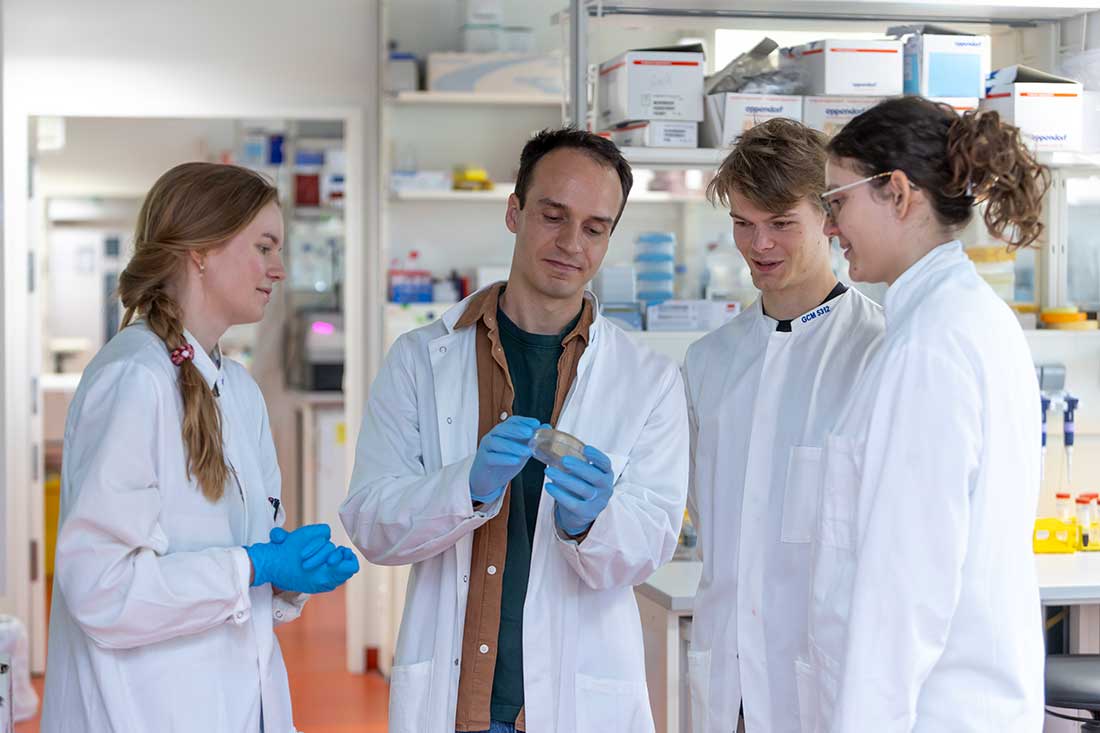
The Terra Incognita of RNA-Coding Genes
“Translational control in T cells” is the name of Jonathan Bohlen’s project, funded by the German Research Foundation since 2026. T cells in particular, he says, repeatedly face “unique translational challenges” when they have to reprogram their protein synthesis at top speed after being activated by antigens. How translation factors orchestrate these processes, and which discordant notes favor the emergence of disease, is what Bohlen investigates today at the Gene Center and at the Dr. von Hauner Children’s Hospital of Munich’s Ludwig Maximilian University (LMU), which after his years in Paris had first entrusted him with a junior group for nucleic acid research within its Cluster of Excellence NUCLEATE. “If selective translation is a modulable regulatory axis of immune cells, then that axis can become the point of attack for new drugs.” To get there, though, one has to map the “landscape” through which this axis runs. Part of that landscape are the genes that do not code for proteins by way of messenger RNAs, but instead code directly for ribosomal, interfering, or transfer RNAs. For transfer RNAs alone there are at least 400 of them, Bohlen says. “In today’s clinical genomics they are the most invisible elements of all.” Yet they could easily be found if, in the future, whole genomes were sequenced as a matter of routine, rather than merely all the exons of the genome, as is currently standard practice. “In patients with unexplained immunodeficiencies we are seeing the first indications that at least variants of transfer-RNA genes are involved.” With its Life Sciences Bridge Award the Aventis Foundation intends to support Bohlen’s career.
Author: Joachim Pietzsch, wissenswort
Photos: © Uwe Dettmar
¹ Bohlen J et al. (2020). Selective 40S footprinting reveals cap-tethered ribosome scanning in human cells. Molecular Cell 79, 561–574. https://doi.org/10.1016/j.molcel.2020.06.005 ² Bohlen J et al. (2020). DENR promotes translation reinitiation via ribosome recycling to drive expression of oncogenes including ATF4. Nature Communications 11, 4676. https://doi.org/10.1038/s41467-020-18452-2 ³ Bohlen J et al. (2023). Human MCTS1-dependent translation of JAK2 is essential for IFN-γ immunity to mycobacteria. Cell 186, 5114–5134. https://doi.org/10.1016/j.cell.2023.09.024