Today, children diagnosed with acute lymphoblastic leukemia can be cured with conventional therapies with a probability of almost 90 percent. This was already the case when Judith Feucht began working as a resident at the University Hospital of Tübingen after completing her medical studies in 2011. However, the young patients she treated there had often suffered a relapse of their blood cancer. They had exhausted all treatment options, and their chances of survival were slim. During those years, American clinics in New York, Memphis, and Philadelphia offered hope for such children and their parents. In the first decade of the 21st century, a new form of gene therapy for the treatment of blood cancer had been developed there, which was first tested on patients in the early 2010s. These patients had their own T cells removed and genetically engineered outside their bodies with an artificial surface receptor that was precisely targeted at specific cancer cells. The manufacturing process took three to four weeks before the modified cells were re-administered to the patient. This so-called CAR-T cell therapy was based largely on preclinical research by Michel Sadelain in New York. He also published the results of the first clinical trial in adults. Carl June, in turn, became a pioneer in Philadelphia in the treatment of children with leukemia using CAR-T cells – with remarkable success. In April 2012, June treated a child suffering from refractory leukemia for the first time as part of a clinical trial. That child was 7-year-old Emily Whitehead. She recently celebrated her 20th birthday. Judith Feucht recalls that a few children from Tübingen were also sent to the US at the time under the aegis of department director Rupert Handgretinger. “I have to learn the technique to bring this therapy to Germany,” she thought. With the support of her doctoral supervisor Tobias Feuchtinger, she contacted Michel Sadelain. He was impressed by her determination and invited her to introduce herself to his group in New York. A few months later, Feucht found herself working as a postdoctoral researcher with Sadelain at Memorial Sloan Kettering Cancer Center, where she made substantial contributions to the further development of CAR-T cell therapy.
The way out of a dilemma in cancer medicine
In addition to the natural killer cells of our innate immune system, the cytotoxic CD8 T cells of our adaptive immune system are by far the most important immune cells for the early elimination of tumors. Like healthy body cells, cancer cells present small fragments from the breakdown of their no longer needed or used proteins in suitable frames, the MHC-I molecules, on their surface. Ideally, T cells use one of their receptors to recognize these cancer peptides as foreign antigens and kill the cells that display them. Understandably, cancer cells try to escape this fatal identification process. One of their strategies is to reduce the number of antigens displayed or even reduce them to zero. This allows them to thwart the T cells’ search for tumors, as their receptors can only recognize antigens presented by MHC-I molecules. This dilemma in cancer medicine led to the idea, as early as the late 1980s, of developing artificial T cell receptors that do not rely on MHC presentation of cancer antigens. Antibodies produced by B cells recognize MHC-independent surface markers as antigens. Therefore, chimeras consisting of an extracellular antibody portion and an intracellular T cell activation domain were constructed and called chimeric antigen receptors (CAR). However, the first generation proved to be ineffective. It was not until Michel Sadelain introduced a costimulatory domain into the T-cell construct in 2003 that the second, effective generation of CARs was created. It was also Sadelain who identified and validated the surface antigen CD19 on certain blood cancer cells as an ideal target for CAR-T cell therapy.
From the Swabian Alb to a world-class laboratory
Judith Feucht was not born knowing that one day she would be at the forefront of immunotherapy research and involved in the construction of new generations of CARs. She grew up and went to school on the Swabian Alb and then studied medicine in Tübingen for six years. “That seems very narrow,” she says. “But traveling has always enriched me.” And indeed, she used her studies to undertake an unusually large number of international clinical placements. From the Austrian town of Bludenz to the French Caribbean, Gabon in West Africa, Sydney in Australia, and Baden in Switzerland, her medical training took her to many different places during her semester breaks and her practical year. “I approached my studies with an open mind, both towards the world and towards science.” Inspired by her interest in immunology, she completed her doctoral thesis in this discipline. “Of course, the scope was limited.” Other topics also remained exciting for the young assistant doctor as she specialized in pediatrics. But she became increasingly affected by the suffering of children with cancer. News of emerging immunotherapies rekindled her old interest in immunology, which she had already devoted herself to in her doctoral thesis. The particularly malignant neuroblastoma became the focus of her attention. Could immunotherapies also be developed to combat this? With the mission to learn more about it, she applied for a six-month scholarship from the Munich-based Care-for-Rare Foundation, which enabled her to start working in Sadelain’s world-class laboratory in 2015. She had applied for funding to the German Research Foundation (DFG) in good time and was granted approval, enabling her to stay on after the scholarship expired. “I only learned about the genetic modification of T cells in New York.”
1XX-CARs: A triumph of rational design
She recalls that it was a good time to settle into this large laboratory, where people with a wide range of expertise work together at the bench. “We were constantly exchanging ideas, helping each other, and learning from each other.” The global hype surrounding CAR-T cell therapies only began two years later, after the US Food and Drug Administration (FDA) approved the first of them under an accelerated procedure for the treatment of advanced stages of acute leukemia in patients up to 25 years of age. Of the 79 patients treated with this therapy, marketed under the trade name Kymriah®, in the approval study, 55 percent were still alive five years later. This is a sensational success. However, it also highlights a limitation of second-generation CAR-T cells: initially, they do their job extremely thoroughly, but then often tire quickly and gradually lose their effectiveness as their condition deteriorates. Overcoming this limitation was a major concern for the group that Feucht had joined. “We learned aspects from the translation that we did not know about in the preclinical phase.” This led her to take a closer look at how the signal “Cancer cell detected!” arriving at its receptor is transmitted within a CAR-T cell to trigger its killer mechanism. The T-cell activation domain of CARs contains three interfaces that modulate the strength of this signal. These are known as ITAMs. But does a CAR-T cell really need all three? Feucht wondered. In complex experiments that required great technical skill, she and her group created CARs that lacked one or two ITAMs. She then characterized these CARs using molecular biology techniques and tested the T cells equipped with these variants in mouse models of acute lymphoblastic leukemia. The surprising result was that CAR-T cells from which she had removed the second and third ITAMs worked better than the original. These 1XX CAR-T cells not only fatigued more slowly, but also formed long-lived memory cells more frequently. By specifically dimming the signal strength, she had given the cancer-killing cells an endurance boost . “At first, I couldn’t believe it,” recalls Feucht, who holds a patent on 1XX-CAR as its inventor. “The best moment for me was when other researchers were able to reproduce our results.”
Initial clinical studies are encouraging
A recently published Phase I clinical trial in adult blood cancer patients has shown that 1XX-CAR T-cell therapy is effective even at relatively low doses. This reduces the risk of the life-threatening side effect of a cytokine storm caused by an overactivated immune system. It also makes it easier to produce enough T cells for therapy. “We take them from patients who are weakened by many previous therapies,” says Judith Feucht. “Sometimes they don’t have that many T cells left. So, it’s good to be able to get by with less.” In addition, 1XX CAR-T cells offer the chance to finally target solid tumors therapeutically. The fact that this has not been possible with conventional CAR-T cells is not only because blood cancer cells are more accessible and have more uniform surface antigens than cancer cells that proliferate within an organ such as the lungs or ovaries. It is also because the tumor tissue surrounds itself with a dense immunosuppressive network in which T cells very quickly run out of steam. Clinical trials are already underway to determine whether 1XX-CAR-T cells, with their improved condition, can achieve more in this area.
A family laboratory in the Cluster of Excellence
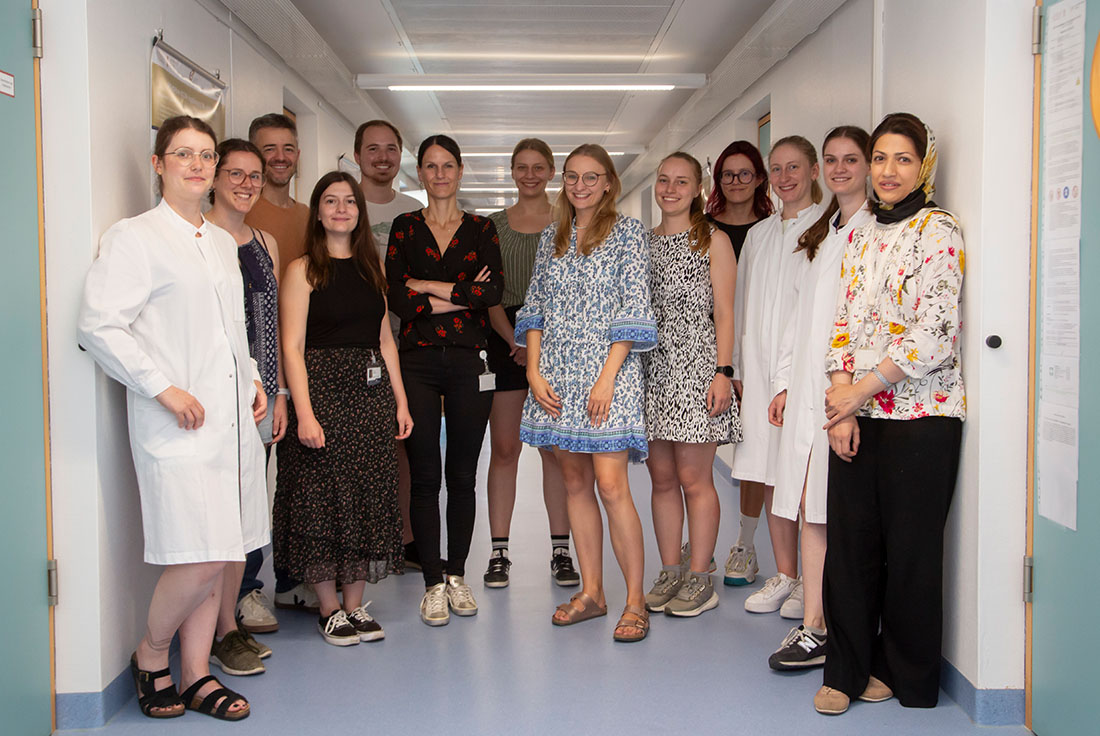
In Tübingen, where she has been conducting research again since 2020 and has held a W2 professorship for cellular immunotherapies against cancer since 2023, Judith Feucht has been a member of the iFIT Cluster of Excellence since her return. The cluster’s term was extended by another seven years in May of this year. iFIT is Germany’s only oncology cluster of excellence. Its leading national position ensures that cancer therapies developed there reach clinical trials more quickly – an ideal environment for Judith Feucht and her partner Josef Leibold, who is a junior professor specializing in functional immunogenetics. “We studied medicine together and later went to the US at almost the same time,” Feucht reports. Today, both run their laboratories under the joint umbrella of “Feucht & Leibold Labs,” with him focusing on tumor biology and her on immunology. This allows them to address the question “What makes tumor cells dangerous, what makes T cells effective?” in an optimal complementary manner, says Feucht. Seventeen women and four men work in the combined laboratories of the two principal investigators. And in group photos, the couple’s 3-year-old daughter beams at the camera in the foreground. Promoting women in science is a matter close to Feucht’s heart. “Too many women still fail to make the leap into research after completing their doctorates because that’s when they have children,” she says, setting an example for her female colleagues that you don’t have to give up your career even if you have children and take parental leave.
While still in New York, Judith Feucht had established a second scientific foothold, which earned her a Starting Grant from the European Research Council in 2022, from which she can draw funds until 2027. She set her sights on senescent cells. These are chronically damaged cells that our body deprives of the ability to divide so that they do not degenerate into cancer cells. Therapeutically, it can be useful to put cancer cells into a state of senescence. However, the older we get, the more senescent cells accumulate, which secrete a specific cocktail of inflammatory messengers that damage the surrounding tissue and promote the development of diseases such as fibrosis, diabetes, atherosclerosis, or cancer. Feucht and her colleagues have now discovered that senescent cells have a particularly conspicuous surface feature, the uPA receptor. So, they constructed CARs whose antibody component recognizes uPAR and thereby transmits the signal for their destruction to the T cells equipped with them. These uPAR-CAR-T cells have already proven themselves in animal models. They open up the prospect of being able to target age-related diseases that have been difficult to treat in the past with customized immune cells.
Double attack on solid tumors?
“We now understand the biology of CAR-T cells so well that we are constantly finding new targets for the design of better CAR products in their signaling pathways, even if it is only by replacing a single amino acid,” says Feucht. She is therefore confident that her group remain at the forefront of the global competition to extend the scope of CAR-T cell therapies to solid tumors. However, they would hardly be able to achieve the same high status as in blood when used as monotherapy. The number of MHC-independent surface markers on tumor cells is too limited, and their expression there is too heterogeneous. Antigens on the MHC framework and inside a tumor cell occur tens of thousands of times more frequently. If patients are vaccinated with one of these antigens, many T cells with a specific receptor can be obtained. If the gene sequence of this receptor is decoded, it can be genetically engineered and used to modify T cells that have been taken from the patient and then returned to them. This is the principle behind T-cell receptor therapies. Work is already underway on the construction of hybrids from CAR-T cell and T cell receptor therapies. “It’s very exciting to see what’s happening,” says Judith Feucht. “There are areas where both principles come together and where we are also conducting research here in the laboratory.” The Aventis Foundation is supporting her on her way to a permanent professorship with a Life Sciences Bridge Award.
Author: Joachim Pietzsch, Wissenswort
Photos: © Uwe Dettmar
1 Feucht J*, Sun J*, Eyquem J, Ho YJ, Zhao Z, Leibold J, Dobrin A, Cabriolu A, Hamieh M, Sadelain M. Calibration of CAR activation potential directs alternative T cell fates and therapeutic potency. Nat Med, 25:82-88, 2019. DOI: 10.1038/s41591-018-0290-5
2 Amor C*, Feucht J*, Leibold J*, Ho YJ, Zhu C, Alonso-Curbelo D, Mansilla-Soto J, Boyer JA, Li X, Giavridis T, Kulick A, Houlihan S, Peerschke E, Friedman SL, Ponomarev V, Piersigilli A, Sadelain M, Lowe SW. Senolytic CAR T cells reverse senescence-associated pathologies. Nature, 583(7814):127-132, 2020. DOI: 10.1038/s41586-020-2403-9


)