)
24th August 2026
Science in 120 seconds
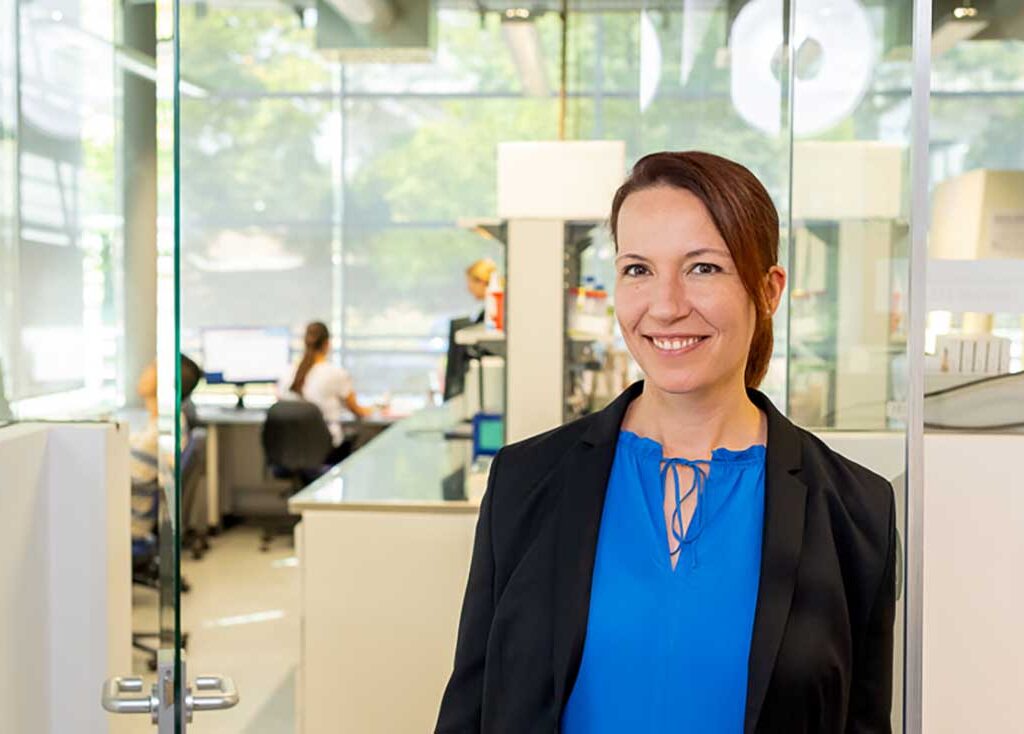
As the recipient of the “Life Sciences Bridge Award 2022,” Dr. Melanie Schirmer explains how she has expanded her microbiome research since receiving the award.
What were you researching back then?
Even back then, my research focused on deciphering the human gut microbiome, with the goal of better understanding the underlying biological mechanisms and identifying potential targets for new forms of diagnosis and therapy.
How did the award make a difference?
The award helped increase the visibility of my research and gave me greater flexibility to pursue and test new and higher-risk research ideas. In addition, the award has significantly supported the expansion of my scientific network, thereby enabling new collaborations.
What are you doing today?
At the Technical University of Munich, I hold a professorship in Translational Microbiome Research. I have been able to significantly expand my research program and place a special emphasis on the use of new technologies such as third-generation sequencing and organoid models. In addition, my research focus has expanded into the field of women’s health, an area in which the microbiome plays an important but as yet insufficiently understood role.
Milestones since the award ceremony:
Microbial translocation of oral bacteria into the gut in liver diseases:
In advanced chronic liver disease, certain oral bacteria increasingly enter the gut, where they weaken the intestinal barrier through a collagen-degrading enzyme and thus likely contribute to liver fibrosis and the progression of the disease. Publication in Nature Microbiology.
Desulfovibrio bacteria and their role in inflammatory diseases:
Different species of Desulfovibrio bacteria vary greatly in their disease-relevant properties and influence the immune system through flagellins, structure-forming proteins that are essential for bacterial motility. Publication in Nature Communications (accepted).
Gut Microbiome and Metabolism in Ulcerative Colitis:
Certain gut bacteria alter metabolism in the gut and blood in ulcerative colitis; they can influence inflammation and even reduce the effectiveness of medications, thereby potentially affecting disease progression and treatment success. Publication in Cell Host & Microbe.
Scientific awards:
Appointment to the Rudolf Mössbauer Professorship in “Translational Microbiome Data Integration” (Technical University of Munich)
Clarivate Highly Cited Researcher 2021, 2022, 2023, 2024